
MUSK Scientific – Dammam, Saudi Arabia
Laboratory Gas Distribution Systemsin Saudi Arabia
Complete laboratory gas solutions — design, supply and installation of gas manifolds, regulators, stainless steel tubing, valves and point-of-use connections.
Complete Laboratory Gas Distribution Systems
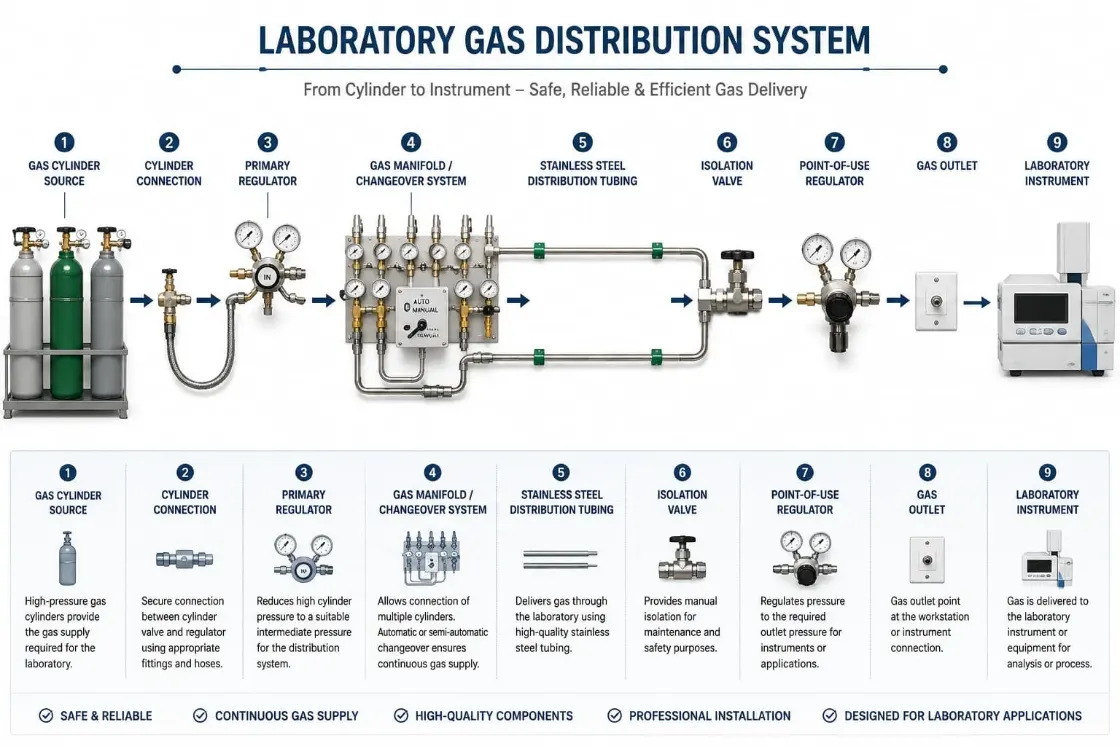
A laboratory gas system is more than a pipeline. It is a complete distribution network designed to deliver the required gas from the cylinder or central gas source to each laboratory point of use.
MUSK Scientific provides laboratory gas distribution solutions configured around the laboratory layout, gas requirements, operating pressure and equipment connection points.
From individual cylinder connections to multi-cylinder gas distribution systems and multiple laboratory outlets, the system can be configured to support different laboratory environments and equipment requirements.
Gas Cylinder→
Cylinder Connection→
Pressure Regulation→
Gas Manifold / Changeover→
Stainless Steel Distribution Tubing→
Isolation Valve→
Point-of-Use Regulator→
Gas Outlet→
Laboratory Instrument
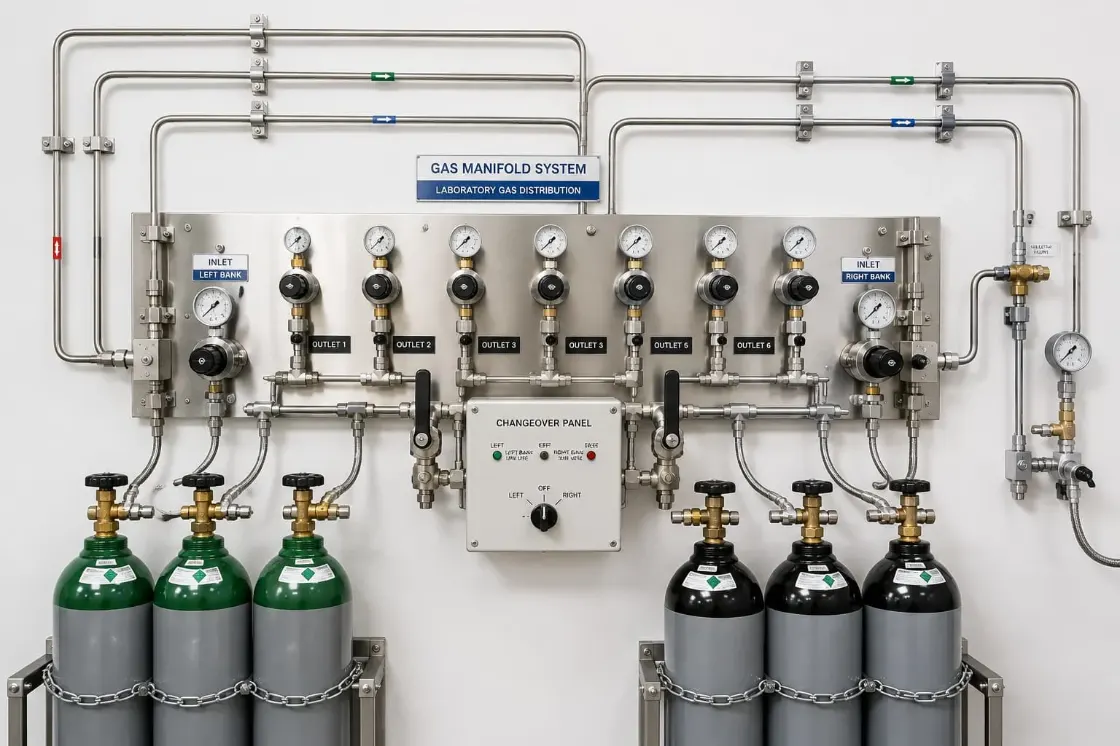
Laboratory Gas Manifold & Changeover Systems
Gas manifolds provide a controlled connection between multiple gas cylinders and the laboratory distribution network. Depending on the project requirements, systems can be configured for single-cylinder, multi-cylinder, manual or semi-automatic supply arrangements.
Changeover systems help manage primary and reserve cylinder banks while maintaining controlled gas delivery to the distribution line.
Typical system components may include:
- Cylinder connections
- High-pressure regulators
- Pressure gauges
- Relief valves
- Isolation valves
- Flexible cylinder hoses
- Manifold headers
- Changeover controls
- Expansion panels
Designed for organized gas supply, controlled pressure management and convenient connection of multiple cylinders.
Discuss Your Gas Manifold RequirementCylinder Point Gas Regulators
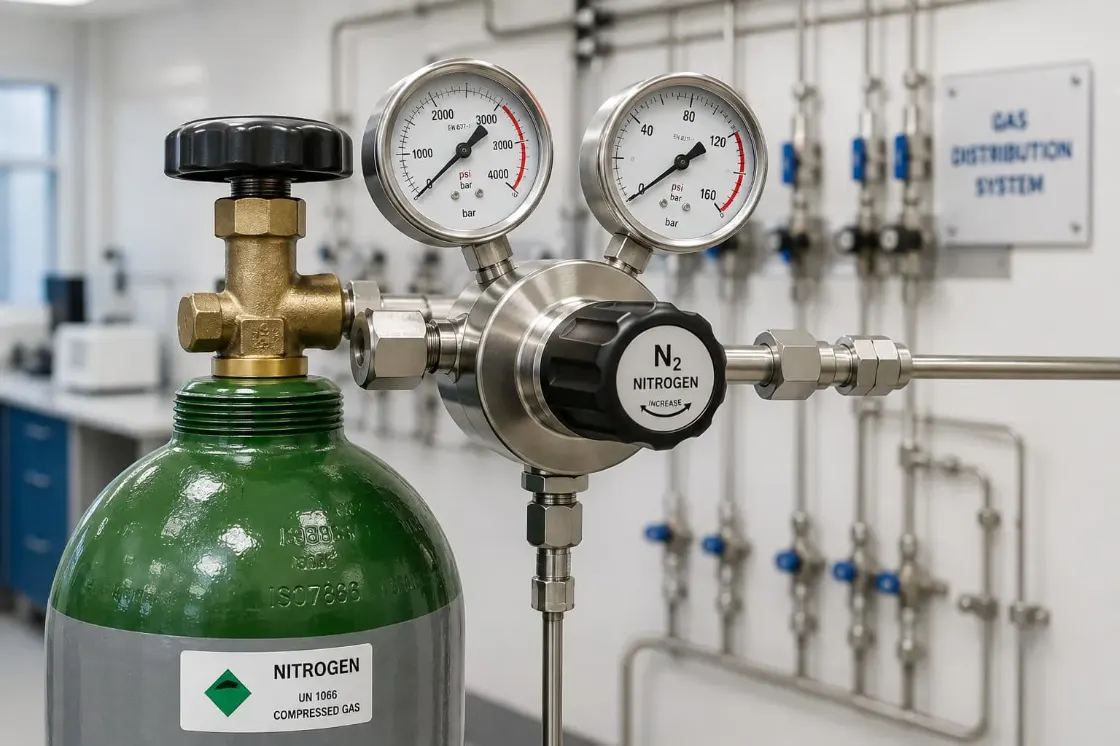
Cylinder point regulators control gas pressure directly at the cylinder connection before the gas enters the distribution network.
The regulator configuration is selected according to the gas type, cylinder pressure, required outlet pressure, connection requirements and laboratory application.
Available configurations may include single-stage or multi-stage pressure regulation and stainless-steel construction for applications requiring suitable material compatibility and controlled gas delivery.
Features:
- High-pressure cylinder regulation
- Gas-specific configurations
- Pressure gauges
- Suitable inlet and outlet connections
- Stainless-steel options
- Pressure control for downstream distribution
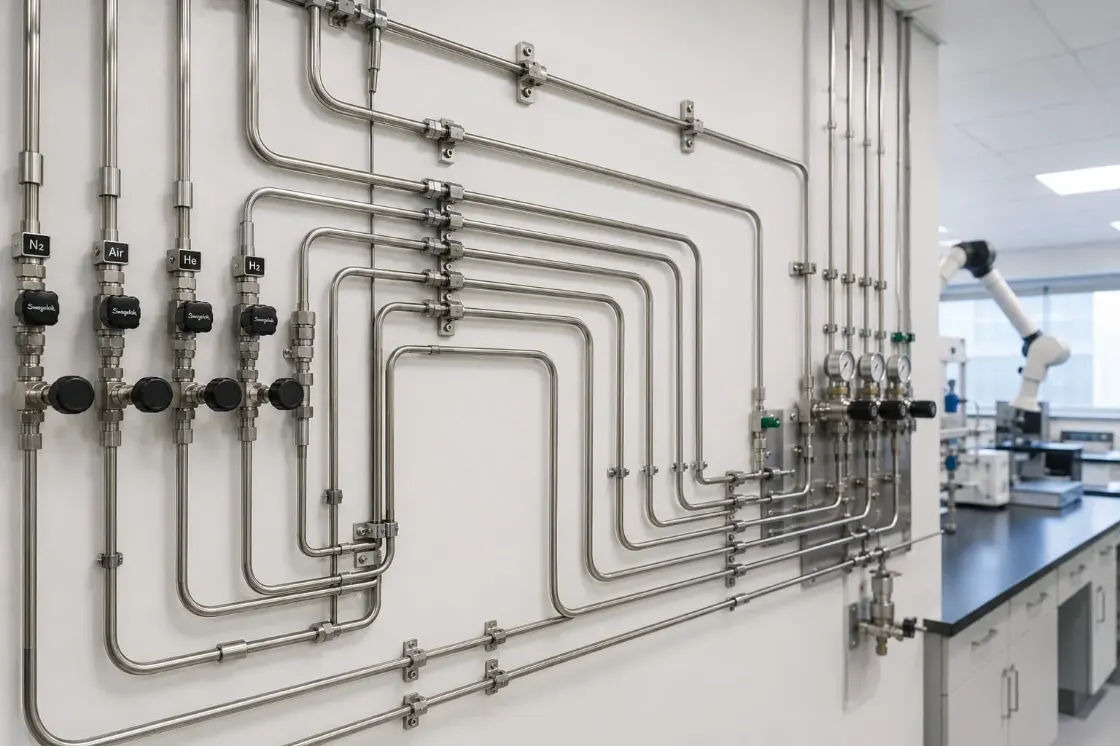
Stainless Steel Laboratory Gas Tubing
Stainless steel tubing forms the main distribution path between the gas source, manifold, laboratory branches and points of use.
Tubing selection depends on the gas type, pressure, application, installation layout and required connection method.
MUSK Scientific provides stainless-steel gas tubing solutions for laboratory distribution projects where controlled and reliable gas delivery is required.
Features:
- Stainless steel gas tubing
- Laboratory distribution lines
- Branch connections
- Equipment connections
- Tube routing
- Tube bending
- Connection to regulators and fittings
- Configurations selected according to application requirements
Technical note: Material grade, tubing dimensions, surface finish and connection method should be selected according to the gas service and project requirements.
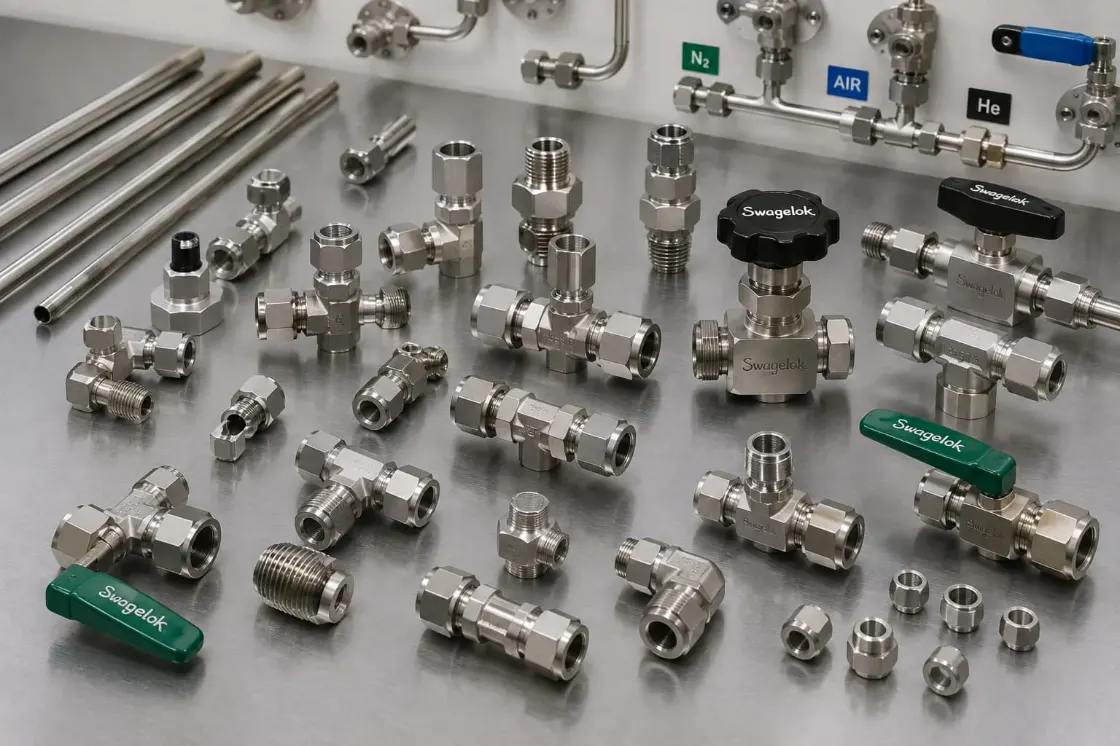
Laboratory Gas Fittings, Valves & Connections
Reliable connections are essential throughout a laboratory gas distribution system. MUSK Scientific supplies gas-system fittings and valves for connecting tubing, regulators, manifolds and laboratory outlets.
Typical components include:
- Tube unions
- Union tees
- Male connectors
- Female connections
- Reducing unions
- Hex nipples
- Compression fittings
- Ball valves
- Isolation valves
- Adapters
- Gas-specific connections
Components are selected according to the gas service, pressure, tubing specification and connection requirements of the project.
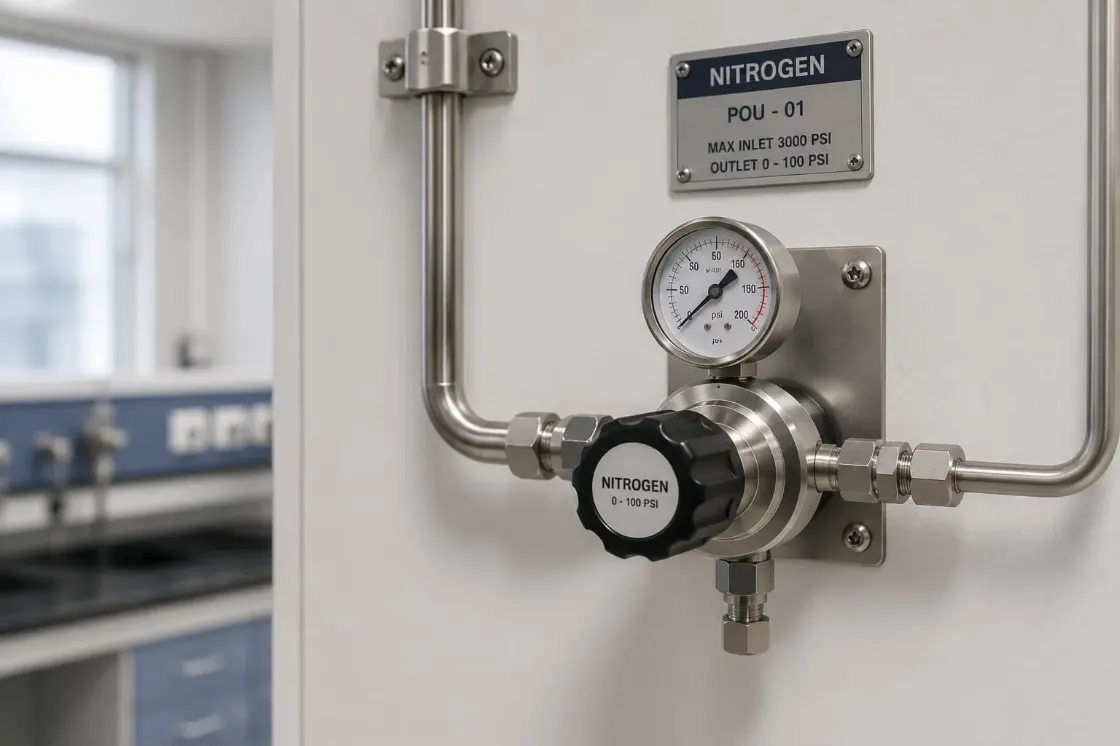
Point-of-Use Gas Regulators
Point-of-use regulation provides pressure control close to the laboratory instrument or workstation.
This allows the required delivery pressure to be controlled at the location where the gas is actually used.
Point-of-use systems can be configured for different gases and laboratory applications, with regulator, gauge, isolation valve and outlet arrangements selected according to the required service.
Applications:
- Analytical instruments
- Laboratory workstations
- Instrument gas supply
- Research equipment
- Specialized laboratory equipment
- Gas outlets integrated with laboratory furniture
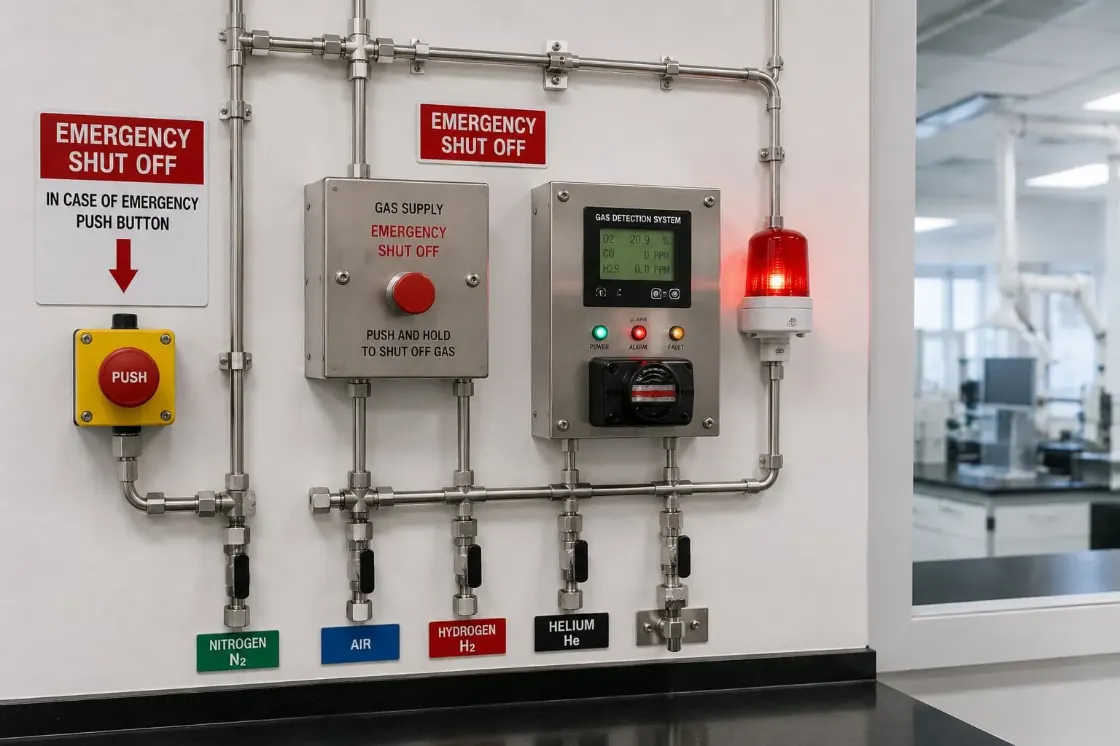
Laboratory Gas Safety & Control Components
A properly planned laboratory gas system requires suitable pressure control, isolation and safety components.
Depending on the gas and application, the system may include:
- Pressure relief valves
- Isolation valves
- Pressure gauges
- Filters
- Flashback arrestors
- Gas-specific cylinder connections
- Shut-off arrangements
Component selection should always consider the gas type, operating pressure, installation requirements and intended laboratory application. Where cylinder storage is also required, MUSK Scientific offers fireproof gas cylinder cabinets and standard gas cylinder cabinets as part of a complete laboratory safety solution.
Note: no laboratory gas system can be described as completely leak-proof or 100% safe — safety depends on correct component selection, installation and maintenance.
Laboratory Gas Systems for Different Gases
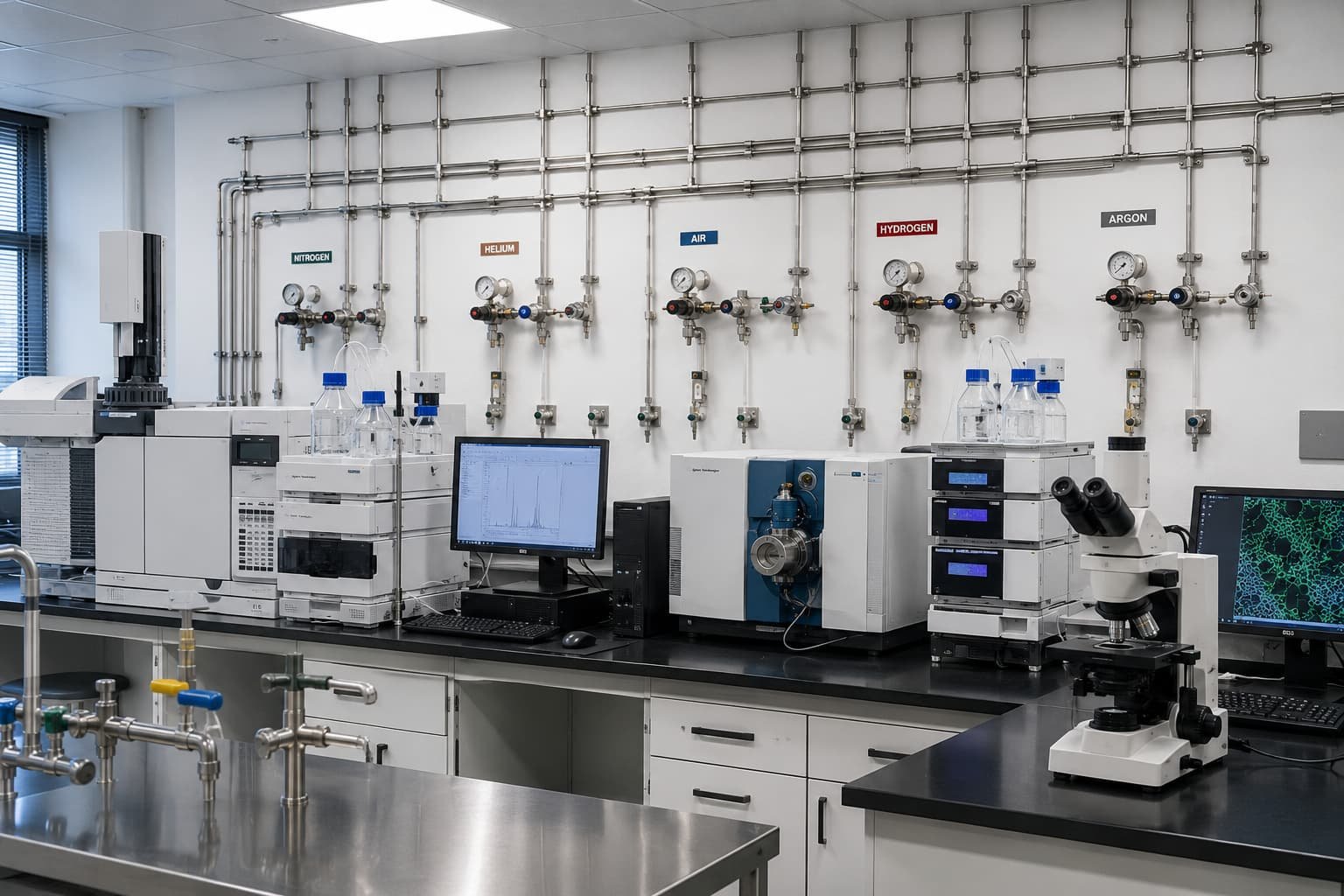
Laboratories use different gases for analytical instruments, research, testing, controlled atmospheres and specialized applications. Gas-system components must be selected according to the gas properties, pressure and application.
Nitrogen (N₂)
Argon (Ar)
Helium (He)
Hydrogen (H₂)
Oxygen (O₂)
Zero Air
Carbon Dioxide (CO₂)
Compressed Air
Specialty & Calibration Gases
System components are selected according to gas compatibility, pressure and application requirements.
Laboratory Gas Systems for Different Applications
MUSK Scientific supports laboratory gas distribution requirements across a wide range of scientific, educational and industrial environments.
Industrial Laboratories
Research & R&D Laboratories
Pharmaceutical Laboratories
Analytical Laboratories
Chemical Laboratories
Quality Control Laboratories
University Laboratories
School Science Laboratories
Environmental Testing Laboratories
Food & Beverage Testing Laboratories
Mining & Industrial Laboratories
Calibration & Instrumentation Laboratories
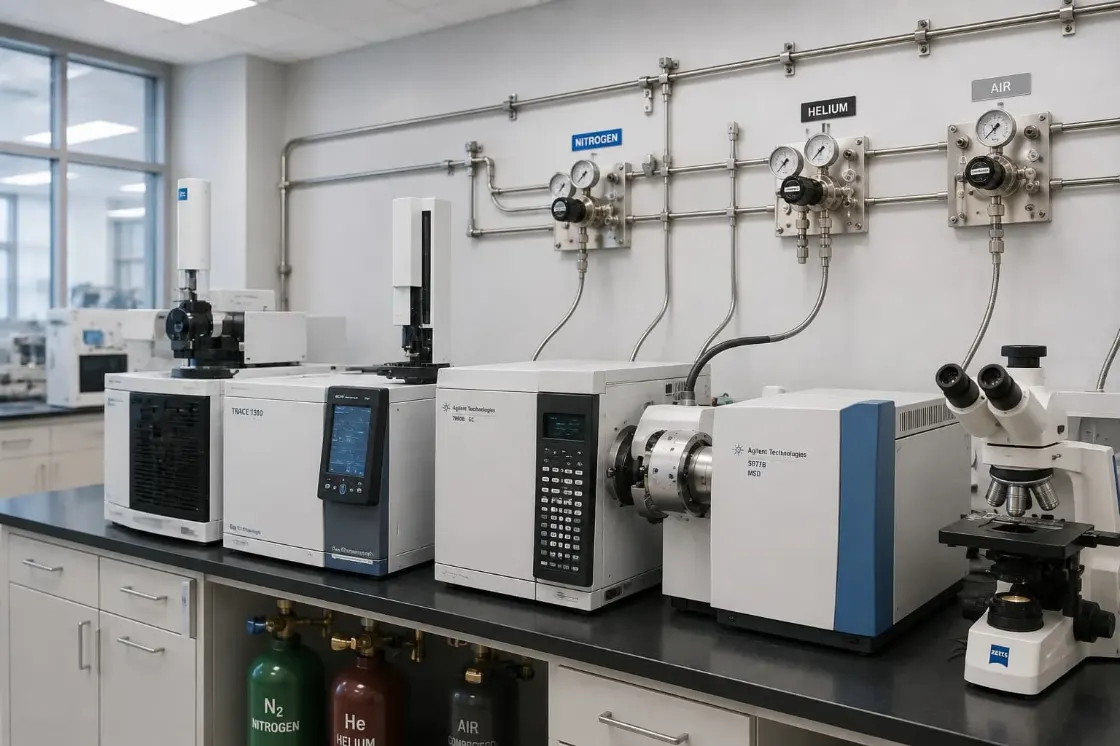
Our Laboratory Gas System Installation Process
Every laboratory gas project starts with understanding the laboratory, gas requirements and equipment connection points.
STEP 01
Site Survey & Requirement Assessment
Review the laboratory layout, gas requirements, cylinder arrangement, equipment locations and required connection points.
STEP 02
System Planning
Determine the distribution arrangement, pressure-control requirements, tubing routes and component requirements.
STEP 03
Component Selection
Select suitable regulators, manifolds, tubing, fittings, valves, hoses and point-of-use components according to the application.
STEP 04
Installation
Install and connect the gas distribution components according to the approved project requirements.
STEP 05
Testing & Commissioning
Check the completed system and verify the installation according to the project requirements before handover.
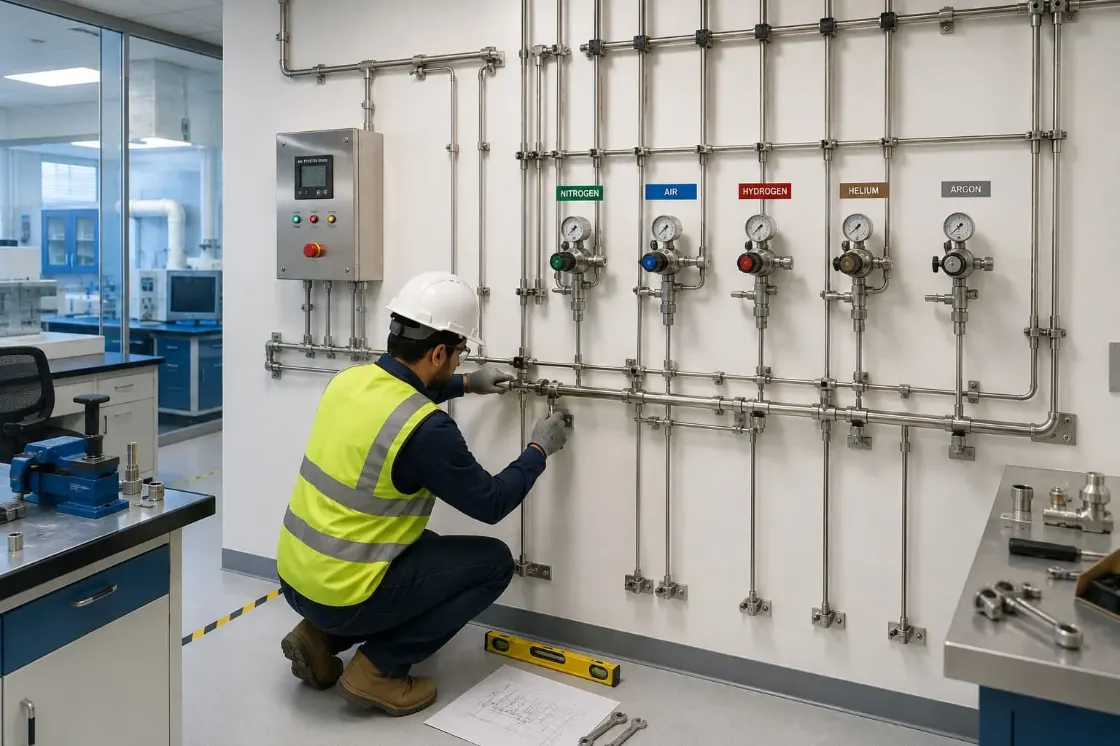
Laboratory Gas Systems Across Saudi Arabia
MUSK Scientific is based in Dammam and supports laboratory projects across Saudi Arabia.
Our laboratory gas distribution solutions are available for projects in Dammam, Dhahran, Al Khobar, Jubail, Al Ahsa, Riyadh, Jeddah, Yanbu, Makkah, Medina and Tabuk.
We support customers across the Eastern Province and throughout the Kingdom for laboratory gas distribution, tubing, manifolds, regulators, fittings and point-of-use gas requirements.
Why Choose MUSK Scientific for Laboratory Gas Systems?
MUSK Scientific combines laboratory infrastructure knowledge with laboratory gas distribution solutions to support customers from individual laboratory requirements to larger laboratory projects. Explore our related laboratory furniture, fume hood and laboratory equipment solutions, or learn more about MUSK Scientific.
Laboratory-Focused Solutions
Solutions designed around laboratory environments and equipment requirements.
Complete Component Scope
Gas distribution can include manifolds, regulators, tubing, fittings, valves, hoses and point-of-use controls.
Project-Based Planning
Gas systems are planned according to the laboratory layout, gas requirements and equipment connection points.
Saudi Market Coverage
Based in Dammam, with project support across Saudi Arabia.
Planning a Laboratory Gas Distribution System?
Whether you are building a new laboratory, expanding an existing facility or upgrading your current gas distribution network, MUSK Scientific can help you plan the required gas system components and configuration.
Speak with our team about your laboratory gas requirements.
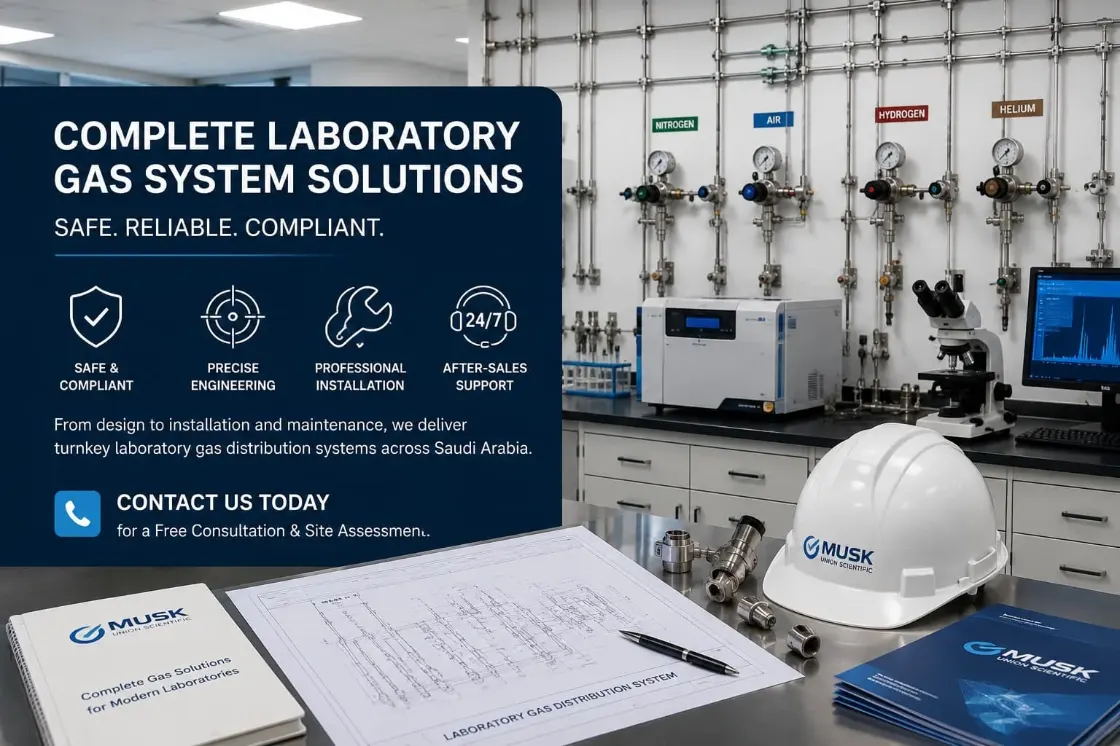
Frequently Asked Questions About Laboratory Gas Distribution Systems
Laboratory gas distribution systems involve more than connecting cylinders to laboratory equipment. The correct configuration depends on the gas type, pressure requirements, equipment, laboratory layout and required points of use. Below are answers to common questions about laboratory gas distribution, tubing, manifolds, regulators, installation and project planning.
What is a laboratory gas distribution system?
+
A laboratory gas distribution system is a network that delivers gases from cylinders or another gas source to the locations where laboratory instruments and equipment require them. Depending on the project, the system can include cylinder connections, pressure regulators, gas manifolds or changeover systems, stainless-steel tubing, fittings, valves and point-of-use regulators.
What does a complete laboratory gas system include?
+
A complete laboratory gas system can include the gas source connection, cylinder regulators, manifolds or changeover equipment, high-pressure flexible hoses, stainless-steel distribution tubing, tube fittings, isolation valves, pressure gauges, filters, safety components and point-of-use regulation. The exact configuration depends on the gases, pressure requirements, laboratory layout and equipment being supplied.
What is laboratory gas tubing used for?
+
Laboratory gas tubing provides the distribution path between the gas source or manifold and the laboratory points of use. Stainless-steel tubing can be used for laboratory gas distribution where the selected material, dimensions, connections and installation method are appropriate for the gas service and operating conditions.
Why is stainless-steel tubing used for laboratory gas systems?
+
Stainless-steel tubing is commonly selected for laboratory gas distribution because it provides a rigid, durable distribution path and can be configured with suitable tube fittings and valves. The appropriate material grade, tube size, surface condition and connection method should be selected according to the gas type, pressure and application.
What is a laboratory gas manifold?
+
A laboratory gas manifold is a controlled arrangement that connects multiple gas cylinders or gas sources to a common distribution line. A manifold can help organize cylinder connections and provide a centralized point for pressure regulation and gas supply management.
What is a gas cylinder changeover system?
+
A gas cylinder changeover system manages the connection between primary and reserve cylinder banks so that gas supply can be controlled as cylinders are consumed. The exact changeover arrangement, including manual, automatic or semi-automatic configurations, depends on the project requirements.
When should a laboratory use a gas manifold instead of connecting cylinders individually?
+
A manifold becomes particularly useful when a laboratory requires multiple cylinders, organized cylinder connections or a centralized distribution arrangement. The appropriate configuration depends on the number of cylinders, gas consumption, required pressure control, laboratory layout and operational requirements.
What is a cylinder-point gas regulator?
+
A cylinder-point gas regulator controls pressure at or near the gas cylinder before the gas enters the downstream distribution system. The regulator must be selected according to the gas, inlet pressure, required outlet pressure, connection configuration and application.
What is a point-of-use gas regulator?
+
A point-of-use regulator provides pressure control close to the laboratory instrument, workstation or gas outlet. It allows the downstream pressure to be controlled at the location where the gas is used rather than relying only on regulation at the cylinder or gas room.
Why can a laboratory need both cylinder regulation and point-of-use regulation?
+
Different stages of a gas distribution system may require different pressure-control functions. Cylinder-side regulation manages the pressure entering the distribution network, while point-of-use regulation can provide the pressure required at a particular laboratory instrument or workstation. The final arrangement should be engineered according to the gas service and equipment requirements.
Which gases can be supplied through a laboratory gas distribution system?
+
Laboratory systems may be designed for gases such as nitrogen, helium, argon, hydrogen, oxygen, carbon dioxide, compressed air, zero air and specialty or calibration gases. Components must be selected according to gas compatibility, pressure and application rather than assuming that every component is suitable for every gas.
Can one laboratory gas system serve several instruments?
+
Yes. A properly planned distribution network can have branches serving multiple laboratory instruments or workstations. The design depends on the number of instruments, gas types, consumption, operating pressure, tubing arrangement and required points of use.
Can laboratory gas tubing be connected to GC instruments?
+
Yes. Laboratory gas distribution can be configured to provide the required gases for gas chromatography systems. The final regulator, tubing, fittings and connection arrangement should be selected according to the instrument manufacturer’s requirements and the gas service.
What gases are commonly required for GC and analytical instruments?
+
Depending on the instrument and analytical method, gas chromatography and other analytical systems may require gases such as helium, hydrogen, nitrogen, zero air or other instrument-specific gases. The actual gas requirements should always be confirmed from the instrument specification and application.
How do you determine the correct laboratory gas tubing size?
+
Tubing size should be determined from the gas type, required flow, operating pressure, distance, number of outlets, expected simultaneous demand, connection requirements and equipment specifications. Tubing diameter should not be selected solely because it is commonly used in another laboratory project.
What components are used to connect stainless-steel laboratory gas tubing?
+
Depending on the system, connections may include tube unions, tees, connectors, reducers, adapters, valves, end connections and other tube fittings. The exact fitting type and size should correspond to the tubing specification, pressure, gas service and connected equipment.
Does laboratory gas tubing require professional installation?
+
For a permanent laboratory gas distribution system, professional planning and installation are important because tubing routes, connections, pressure regulation, support, valves and equipment interfaces all affect the completed system. The installation scope depends on the project requirements and existing laboratory infrastructure.
What is gas line tuning in a laboratory?
+
Gas line tuning refers to configuring and adjusting the gas distribution system so that regulators, manifolds, valves and points of use provide the required gas supply conditions for the connected laboratory equipment. The exact work depends on the existing installation and the gas-system requirements.
Can MUSK modify or upgrade an existing laboratory gas system?
+
Yes, depending on the existing installation and project requirements. An upgrade may involve adding new tubing branches, regulators, valves, outlets or instrument connections, or modifying an existing distribution arrangement. The existing system should be assessed before determining the required modifications.
Can MUSK install a laboratory gas system for a new laboratory?
+
Yes. A new laboratory gas system can be planned around the laboratory layout, gas sources, equipment locations, required outlets and operating requirements. The project may include cylinder connections, manifolds, regulators, tubing, fittings, valves and point-of-use connections.
Can a laboratory gas system be integrated with laboratory furniture?
+
Yes. Gas distribution can be planned around laboratory benches, workstations and equipment locations, with appropriate gas outlets or point-of-use regulators positioned where required. The final arrangement depends on the laboratory furniture configuration and equipment requirements.
What should be considered when planning a laboratory gas distribution system?
+
Important considerations include: gas types; number of cylinders; cylinder storage and location; required inlet and outlet pressures; gas consumption; number of instruments; number of points of use; tubing route and length; tubing material and size; regulator requirements; manifold or changeover requirements; valve and isolation requirements; equipment connection requirements; laboratory layout; and future expansion requirements. These factors should be reviewed before finalizing the system configuration.
Can the laboratory gas system be designed for future expansion?
+
A system can be planned with future laboratory requirements in mind. Where appropriate, the layout can allow for additional branches, outlets or equipment connections, subject to the capacity and technical requirements of the system.
How does MUSK approach laboratory gas system installation?
+
MUSK’s approach can cover requirement assessment, system planning, component selection, supply and installation of gas tubing and related components, followed by system checking according to the project requirements. The exact scope depends on whether the project is a new installation, expansion, modification or gas-line tuning requirement.
Does MUSK supply only gas tubing, or complete gas-system components?
+
MUSK can support both individual component requirements and broader laboratory gas-system projects. The scope can include stainless-steel gas tubing, regulators, manifolds or changeover systems, fittings, valves, cylinder connections and related installation requirements.
Where does MUSK provide laboratory gas system services in Saudi Arabia?
+
MUSK is based in Dammam and can support laboratory gas-system requirements across Saudi Arabia. Priority service areas include Dammam, Dhahran, Al Khobar, Jubail and the wider Eastern Province, with project requirements also extending to cities such as Riyadh, Jeddah, Yanbu, Al Ahsa, Makkah, Medina and Tabuk.
Does MUSK provide laboratory gas systems for universities and schools?
+
Yes. Laboratory gas distribution can be planned for educational laboratories, university teaching laboratories, research facilities and specialized science laboratories. The system can be configured around laboratory benches, instruments, fume hoods and required gas outlets.
Does MUSK provide laboratory gas systems for industrial laboratories?
+
Yes. Industrial laboratory applications can include analytical laboratories, quality-control laboratories, chemical laboratories, petrochemical-related laboratories, mining laboratories, research facilities and other industrial testing environments.
How can I request a laboratory gas distribution quotation from MUSK?
+
To prepare a suitable quotation, provide the laboratory location, gas types, number of cylinders, required gas outlets, equipment or instrument requirements, existing layout or drawing if available, approximate tubing routes or lengths, and any required pressure specifications. MUSK can then review the requirement and determine the appropriate system components and installation scope. You can also contact MUSK Scientific directly to start this process.
What information should I send when requesting a laboratory gas system consultation?
+
The most useful information includes the laboratory layout or drawing, gas list, number of instruments, number of required gas points, cylinder arrangement, equipment specifications, required pressures and photographs of the existing installation if available. If some information is unavailable, the initial requirement can still be reviewed and the missing technical details identified during the assessment.
Laboratory Gas System Planning Guide
Planning a laboratory gas distribution system starts with understanding the laboratory, the gases required, the equipment that will use them and the locations where gas connections are needed. Providing the right information at the beginning of a project helps determine the appropriate regulators, manifolds, tubing, fittings, valves and point-of-use connections.
01
What information do I need before requesting a laboratory gas system?
Start with the laboratory layout, gas types, number of cylinders, number of instruments, required gas outlets and equipment specifications. If available, also provide required operating pressures, approximate tubing routes, existing gas-system drawings and photographs of the current installation.
02
How do I plan gas points for a new laboratory?
Begin by identifying every instrument, workstation or laboratory area that requires gas. Each point should then be associated with the required gas type, pressure and connection arrangement, while the distribution route is planned from the gas source or manifold to the individual points of use.
03
What is the difference between cylinder regulation and point-of-use regulation?
Cylinder regulation controls gas pressure close to the gas source, while point-of-use regulation controls pressure near the instrument or workstation. Depending on the application, a laboratory may require one or both levels of pressure control.
04
When should I use a laboratory gas manifold?
A manifold is useful when multiple cylinders need to supply a common distribution system or when cylinder connections need to be organized at a central location. The appropriate manifold configuration depends on the number of cylinders, gas consumption, pressure requirements and operating arrangement.
05
What should an RFQ for laboratory gas tubing include?
An RFQ should ideally identify the gas types, tubing material and size if known, approximate tubing quantities or routes, number of gas points, regulator requirements, manifold requirements, fittings, valves and installation requirements. A laboratory layout or drawing is particularly useful for determining the distribution arrangement.
06
How do I upgrade an existing laboratory gas pipeline?
First, the existing system should be reviewed to understand the current gas sources, tubing routes, regulators, pressure requirements and connection points. The upgrade can then be planned around the additional instruments, new gas points or changes required while considering compatibility with the existing installation.
07
Can a laboratory gas system be expanded later?
A system can be planned with future expansion in mind. Where practical, the initial distribution layout can consider additional branches, gas outlets or equipment connections, subject to the available system capacity and project requirements.
08
What should I consider when adding a new instrument to an existing laboratory gas system?
Confirm the instrument’s required gases, inlet pressure, flow requirements and connection type first. The existing distribution system should then be reviewed to determine whether it has sufficient capacity and whether an additional regulator, valve, tubing branch or point-of-use connection is required.
09
Should laboratory gas tubing be selected before choosing the regulators?
The components should be considered as part of one distribution system rather than selected independently. Gas type, pressure, flow, tubing size, regulator configuration, fittings and equipment connections all need to work together for the intended application.
10
How can I prepare for a laboratory gas system site assessment?
Prepare the laboratory layout, equipment list, gas requirements, cylinder locations and photographs of existing gas connections if available. Marking the required gas points and identifying any areas planned for future equipment can also help the assessment.
Areas We Serve: Riyadh, Jeddah, Yanbu, Qassim, Khobar, Jubail, Makkah
We also proudly serve: Dammam, Jubail, Madinah, Taif, Abha, Khamis Mushait, Najran, Jazan, Hail, Tabuk, Al Kharj, Unaizah, Sakaka, Arar, Al Bahah, Qatif, Ras Tanura, Hafar Al-Batin, and across the Kingdom of Saudi Arabia.